State Deep Dive: Colorado — 529 Benefits in the Centennial State
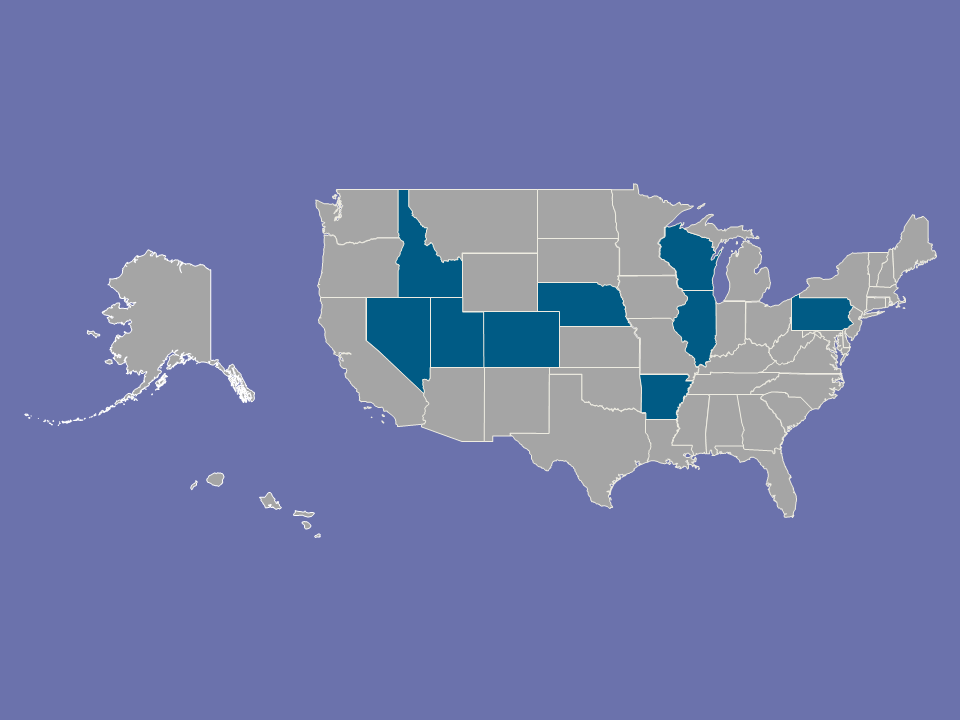
Our State Deep Dive series hits state number seven: Colorado. We're writing this one from beautiful Fairplay, still drying off from a rafting trip down the (ironically named) Arkansas River—and the state deserves the house call. Colorado is the first state in this series that pays families to contribute to a 529 and, separately, pays employers to match those contributions. So this installment does double duty: what Colorado does for your household's tax return, and what it does for your company's.

The Colorado 529 Benefits Landscape: Four Plans Behind One Door
Colorado's 529 program is run by CollegeInvest, a state authority that administers four plans: the Direct Portfolio plan (direct-sold and managed by Vanguard—enrollment is free, and you can fund it with as little as $25), Stable Value Plus (principal-protected, with a guaranteed 2.60% return for 2026), Smart Choice (an FDIC-insured savings option), and Scholars Choice (advisor-sold).
For most families, the Direct Portfolio plan will be the natural pick: Vanguard index portfolios and a 0.27% all-in asset-based fee as of the plan's April 2026 disclosure—the latest in a string of cuts we tracked in our post on falling 529 fees, which have taken total fees down more than 44% since 2009. That's not quite the 0.10%–0.15% of the cheapest national plans, but Colorado still gives you a very good reason not to shop out of state (which brings us to the good stuff!).
$121 Just for Showing Up
Here's the first amazing thing you need to know about Colorado: the state seeds a 529 for its newest residents. Under CollegeInvest's First Step program, any child born or adopted in Colorado on or after January 1, 2020 gets a free $121 contribution, which can be claimed through CollegeInvest's First Step portal any time before the child's eighth birthday.
Better: parents and legal guardians who enroll by December 31, 2026 get their own contributions matched dollar-for-dollar by CollegeInvest, up to $500 per year for three years. That's up to $1,621 of free money ($121 + 3 × $500), and the enrollment deadline makes it the most time-sensitive item in this post.
The Colorado 529 Tax Deduction: A Cap Most Families Will Never Summit
The second amazing thing is the state income tax deduction. Colorado has 58 peaks above 14,000 feet (affectionately known as 14ers by locals), and its deduction for 529 contributions is sized accordingly. For the 2026 tax year, Colorado taxpayers can deduct up to $26,200 per beneficiary for single filers, or $39,200 per beneficiary for joint filers from their state taxable income, and the caps adjust upward every year with in-state tuition inflation. A cap this high is a distinction worth noting—most families will never hit it.
The mechanics, per the Colorado Department of Revenue's guidance:
The deduction (Colorado formally calls it a "subtraction") applies only to contributions made to CollegeInvest-administered plans—an out-of-state 529 earns you nothing on your Colorado return.
It applies at Colorado's flat income tax rate of 4.40%, so every $1,000 contributed saves $44 in state tax ($1,000 × 4.40% = $44).
Anyone who contributes can claim it: parents, grandparents, generous neighbors—the deduction follows the contributor, not the account owner, as long as the contributor pays Colorado income tax.
Note: Colorado does not extend the deduction to K-12 tuition—contributions later withdrawn for K-12 expenses get added back to your Colorado taxable income. The same recapture applies to 529-to-Roth rollovers and rollovers out to another state's plan. So plan to withdraw from your CollegeInvest plan for college expenses first.
Example #1: One Fort Collins Family
As usual, let's make this concrete with an example. Naomi and Grant Ellison live in Fort Collins, file jointly, and earn $168,000 combined. Their daughter Isla arrives in 2026. They open a Direct Portfolio account that week, claim First Step's $121, enroll in the match, and contribute $650 per month ($7,800 per year)—a fraction of their $39,200 joint per-beneficiary cap, so every dollar is deductible.
The Colorado 529 tax deduction refunds them $343 every April ($7,800 × 4.40% = $343), which comes to roughly $6,200 across 18 years. First Step adds the $121 plus $1,500 of CollegeInvest matching in Isla's first three years—free money that compounds to roughly $4,800 by college at a 7% average annual return. And the account itself grows to approximately $279,000 by 2044—$140,400 of their own deposits plus $139,000 of investment earnings and free money from the state. The same money in a taxable brokerage account would end at about $244,400 after taxes—so the 529 route leaves the Ellisons $34,700 ahead ($279,000 − $244,400), free money and its growth included.
What does $279,000 buy? At CU Boulder's 2026-27 in-state rates, the billed cost is $35,456 per year: $15,014 in base tuition and fees, $19,242 in on-campus housing and meals, and $1,200 in books and supplies. Even after 18 years of tuition inflation, Isla's account covers all four years with real headroom—and because CU Boulder locks each incoming student's tuition rate for four years under its Undergraduate Tuition Guarantee (a CU pricing policy, not a 529 feature), the four-year bill is unusually predictable. Any leftover balance has plenty of good homes: graduate school, a Roth rollover toward her retirement, a beneficiary swap to a younger sibling, or any of the other standard uses for extra 529 money.
Total estimated benefit: ~$40,900 ($6,200 of deduction refunds + $34,700 of extra ending value versus a taxable account).
The Employer Credit: Colorado Pays Companies to Match
Here is the piece that makes Colorado special for the HR and finance leaders in our readership. Under the Working Families College Savings Act, an employer that contributes to an employee-owned CollegeInvest account earns a 20% state income tax credit, up to $500 per employee per year—so a $2,500 match per employee is the sweet spot where the credit maxes out (20% × $2,500 = $500). The fine print worth knowing:
The employee must own the CollegeInvest account (any beneficiary is fine).
The employer claims the credit by filing form DR 0289 with its Colorado income tax return.
Any credit the company can't absorb in a given year (in a loss-making startup year, say, with no Colorado tax bill to apply it against) carries forward up to three years.
The credit applies on top of the ordinary business deductions we walk through in our employer benefits series.
Colorado was one of the first of the nine states offering 529 employer tax incentives, and the whole package tells you something: a state that pays families to save, pays newborns to start, and pays companies to help is one that has decided education savings actually matter.
Example #2: One Denver Employer
Peakline Robotics, a 120-person Denver firm, offers a dollar-for-dollar match of employee 529 payroll contributions through a benefits provider like Hadley, capped at $2,500 per employee per year. Forty employees opt in and contribute enough to earn the full match. Gross cost to Peakline: 40 × $2,500 = $100,000 per year.
Now the recoveries. The Colorado credit returns 40 × $500 = $20,000 on the company's state return. But wait—the employer also deducts the full $100,000 match on its federal taxes, like any other compensation cost: $100,000 × 21% = $21,000 back. And it deducts the match on its Colorado corporate return too: $100,000 × 4.4% = $4,400. Net cost: $100,000 − $20,000 − $21,000 − $4,400 = $54,600 per year—a 45% discount to the nameplate match, or roughly $1,365 per participating employee for a benefit worth far more than that to a parent. It's the benefits equivalent of buying skis in April: same equipment, deeply discounted.
The Federal Layer Underneath
The Colorado 529 benefits above come in addition to the standard federal package available in all 50 states: tax-free growth, tax-free withdrawals for qualified education expenses, superfunding up to $95,000 per beneficiary in a single year, and the SECURE 2.0 Roth escape hatch (with the Colorado recapture caveat noted earlier). Our federal 529 tax benefits post covers the full breakdown.
The Bottom Line
Colorado runs the most complete 529 incentive program this series has covered: a state deduction cap most families can't reach, a Vanguard-managed plan at a low and falling fee, a $121-plus-match head start for every Colorado newborn, and the series' first employer credit that pays companies to help their people save.
If you live in Colorado: open a CollegeInvest account, claim First Step if you have a young child, and contribute enough to make the deduction work for you. If you run payroll in Colorado: between the credit and the deductions, tax recoveries cover almost half of a well-designed 529 match.
Want your company to be the reason an employee's kid graduates college debt-free? Visit Hadley's employers page to see how simple a Colorado 529 match program can be.
//
Questions? Contact us at AskHadley@gohadley.com. We're always open to feedback, suggestions, or otherwise!
This article is provided for informational and educational purposes only and does not constitute investment, legal, tax, or accounting advice. Nothing herein should be construed as a recommendation or solicitation to buy, sell, or hold any security or to adopt any particular investment strategy or vehicle. The views expressed are those of the author as of the date of publication and are subject to change without notice. Any data, figures, or statistics are believed to be reliable as of the publication date but may become outdated. Hadley undertakes no obligation to update such information. Charts, graphs, hypothetical examples, and other visual materials are provided for illustrative purposes only and do not represent actual account performance. Past performance is not indicative of future results. All investments involve risk, including the possible loss of principal. Strategies discussed may not be suitable for all investors, and readers should consult their own professional advisers before making investment decisions. References to third-party websites or content are provided for convenience only. Hadley does not control or endorse, and is not responsible for, the accuracy or content of third-party materials. Advisory services are offered only pursuant to a written agreement and only in jurisdictions where Hadley is properly registered or exempt from registration. Additional information about Hadley is available in its Form ADV, which can be obtained upon request or via the SEC’s Investment Adviser Public Disclosure website: IAPD - Investment Adviser Public Disclosure - Homepage.