529s as an Employee Benefit: The "Why"
Welcome to a new mini-series on The ABCs on 529s, exploring why employer-sponsored 529 benefits are quietly becoming one of the most compelling moves in the modern benefits playbook. In this first installment, we lay out the strategic case: the "why". Future installments will tackle the "how"—529 benefit options available and mechanics—as well as spotlight companies already doing this well.
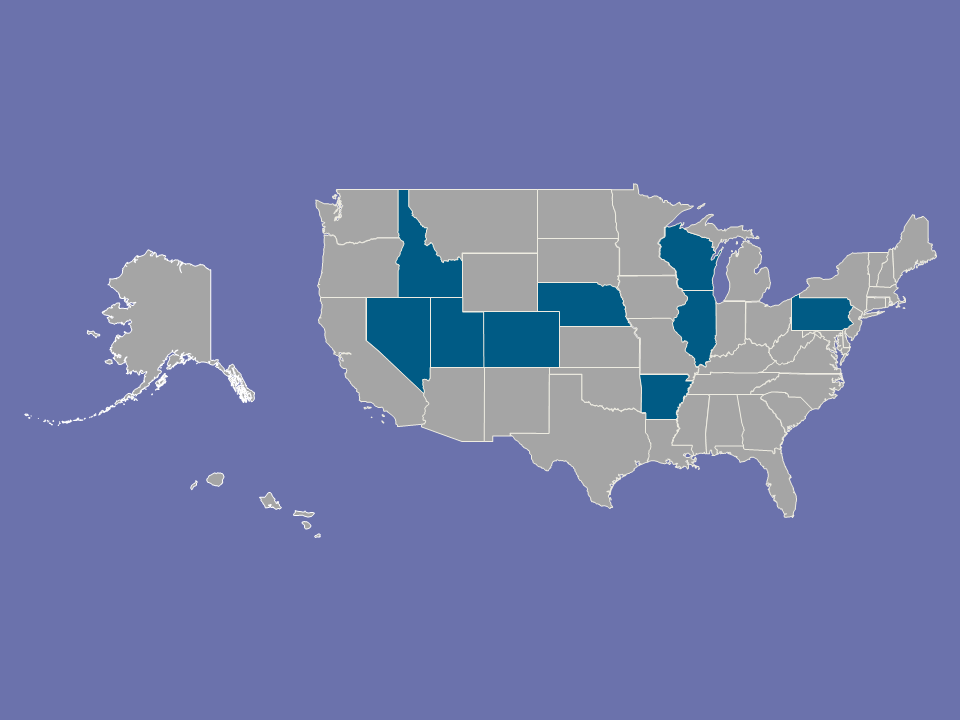
If 529 plans are new to you, our intro to 529 plans will get you oriented in a few minutes, and our earlier post on the nine states offering 529 tax credit to employers is the closest cousin to today's piece.
And if you're an HR or benefits leader exploring 529s as an employee benefit—whether through direct employer contributions, a 529 employer match, payroll deduction, or simply giving employees access and education—keep reading. The strategic case is stronger than most people realize.

The Modern Benefits Bingo Problem
Walk into any benefits team meeting in 2026 and you'll hear the same refrain: the benefits arms race has produced more perks than employees can keep track of. Pet insurance. Pickleball stipends. Annual subscriptions to four different mental-health apps. All boxed and bowed in the open enrollment portal, and most of them, by August, completely forgotten (if ever tried at all).
That's the irony of the modern benefits stack: when every company offers the same shiny thing, none of them feels particularly meaningful—and meanwhile, the things that would meaningfully move the needle for employees are still rare.
Three numbers from the Betterment at Work 2025 Retirement Readiness Report tell the demand-side story:
90% of employees now report financial stress, a record high—up from 71% in 2022.
57% say better financial benefits beyond salary (think 401(k) matching, student-loan support, financial advising) would entice them to leave their current job.
64% of Millennials say they would switch jobs for stronger financial benefits—and Millennials are the most parent-heavy generation in today's workforce.
Yet the supply side, from the 2024 edition of the same report (the most recent year with 529-specific stats), is where the disconnect shows up:
Only ~8% of employers offer a 529 college savings benefit—behind every other financial benefit on the list, including budgeting tools (18%), access to a live financial advisor (17%), and even employer-sponsored emergency funds (9%).
The share of employees saving for college jumped from 26% to 36% in a single year—a roughly 40% relative increase.
Yet only 48% of those savers are actually using a 529, the most tax-efficient vehicle available to them.
Families want help paying for school, demand is growing fast, and the benefits departments most equipped to step in have largely sat the play out. That's a wide-open lane for any employer ready to take it.
The Talent Magnet: Why an 529 Employee Benefit Wins Hires
There are two main reasons a 529 plan as an employee benefit punches above its weight. The first is talent.
The American workforce in 2026 is, demographically, the most parent-heavy it has been in modern memory. Millennials make up the largest single generation in the labor force and are squarely in their child-rearing years—the same cohort 64% of which said they'd switch jobs for stronger financial benefits. Gen X is writing college-tuition checks (and, increasingly, helping save early for grandchildren's education). Even the leading edge of Gen Z is starting families.
What that means in practice: the people you're hiring care about saving for their own, or their kids', education in a way most benefits don't address.
Picture a software engineer weighing two offers with identical comp. Both companies have great health insurance, four weeks of PTO, and Wednesday work-from-home. One offers $2,000 a year contributed directly to a 529 plan for the engineer's daughter. The other offers an upgraded espresso machine in the break room. Which one says "we are a place to build a future with"? Which one is just another bullet on the perks slide?
An employer 529 benefit is one of the rare offerings that scales with what employees actually want from a long-term employer: a tangible vote of confidence in their families. It's not a trinket. It's an investment.
The Financial Wellness Engine
If talent is the first half of the "why", productivity is the second. Financial stress isn't just an employee's problem—it's an everyday tax on the work itself, and education savings is one of its largest single sources.
PwC's 2026 Financial Wellness Survey, released in April 2026, captures the productivity drag in stark terms:
52% of employees don't feel capable of planning for long-term goals (the exact category that includes "saving for college").
53% have less than $5,000 in emergency savings.
Among Gen Z workers, 85% say financial stress affects their mental health, and 71% report reduced productivity because of it.
What does that look like inside the workday? The product manager who should be writing a spec is instead staring at three browser tabs of college cost calculators during her lunch break. The sales rep who should be on a customer call is doom-scrolling his state's 529 plan website at 2:47 PM on a Thursday. Multiplied across a 500-person company, that is a real productivity tax: the kind that doesn't show up as a line item but that any seasoned manager would recognize the moment it was pointed out.
An employer 529 benefit doesn't make tuition free. But it does meaningfully reduce the cognitive load. Knowing that the company is dropping, say, $1,500 into a 529 each year, automatically, alongside the paycheck, is a quiet reassurance that lets employees stop refreshing their balance and start refreshing their pipeline. Reduce financial anxiety, and productivity follows. That isn't a soft benefit. It's a P&L benefit.
A Quick Hypothetical: What $2,000 a Year Buys
Let's put a number on it. Say a mid-size company offers a $2,000 annual 529 employer match (less than the cost of one employee's company laptop and external monitor combined) for an employee with a 3-year-old. At a 7% average annual return, those contributions grow to approximately $50,000 by the time the child turns 18. The total employer outlay over 15 years is $30,000. The earnings, fully tax-free for qualified education expenses (as we covered in our federal 529 tax benefits post), are roughly $20,000 of compounding the family never owes a cent on.
Now compare that to the cost of replacing that same employee if they walk. Industry estimates routinely peg replacement cost at one-half to two times the employee's annual salary. For a $120,000 engineer, that's $60,000 to $240,000 in recruiting, ramp time, and lost productivity. On a pure dollar basis, a $30,000 cumulative 529 match is one of the cheapest retention tools an employer can buy.
The Long-Term Commitment Signal
Many benefits operate on a short horizon: free lunches, holiday bonuses, the summer outing. On the other end of the time scale, the venerable 401(k) match, real and valuable as it is, lives largely in the abstract for many employees—a number on a statement they may not look at for decades.
A 529 benefit operates on an entirely different timescale. When an employer puts money into the 529 of an employee's three-year-old, that money is, explicitly, earmarked for an event 15 years away. The signal is, frankly, kind of remarkable: we are betting on you being part of this company well into your child's college applications.
That signal travels in both directions. Employees whose employer is investing in their family's actual future tend to reciprocate with the kind of loyalty that no lunch-and-learn ever produced. It's the difference between "I work here" and "this company has skin in my family's game."
529 benefits cost a fraction of the salary line, and they land like nothing else on the benefits bingo card.
The Bottom Line
Employer-sponsored 529 benefits check three boxes that few other benefits hit at once: (1) they attract and retain talent in a parent-heavy workforce, (2) they take a measurable bite out of the financial stress that drains employee productivity, and (3) they signal a long-term commitment other benefits structurally can't.
And the timing is right. Employee demand for college-savings help is growing fast—the share of employees actively saving jumped from 26% to 36% in a single year—while employer supply is still tiny, and the few companies already offering this benefit are pulling ahead in the talent market while the rest catch up. The question for HR leaders weighing whether to add a 529 plan as an employee benefit to their 2027 roadmap isn't whether to offer it. It's how soon.
In upcoming installments, we'll get under the hood—covering implementation mechanics and spotlighting companies already running this play well.
Want to see how it could work at your company? Visit Hadley's employers page to learn how Hadley makes rolling out a 529 employer benefit simple, compliant, and turnkey.
//
Questions? Contact us at AskHadley@gohadley.com. We're always open to feedback, suggestions, or otherwise!
This article is provided for informational and educational purposes only and does not constitute investment, legal, tax, or accounting advice. Nothing herein should be construed as a recommendation or solicitation to buy, sell, or hold any security or to adopt any particular investment strategy or vehicle. The views expressed are those of the author as of the date of publication and are subject to change without notice. Any data, figures, or statistics are believed to be reliable as of the publication date but may become outdated. Hadley undertakes no obligation to update such information. Charts, graphs, hypothetical examples, and other visual materials are provided for illustrative purposes only and do not represent actual account performance. Past performance is not indicative of future results. All investments involve risk, including the possible loss of principal. Strategies discussed may not be suitable for all investors, and readers should consult their own professional advisers before making investment decisions. References to third-party websites or content are provided for convenience only. Hadley does not control or endorse, and is not responsible for, the accuracy or content of third-party materials. Advisory services are offered only pursuant to a written agreement and only in jurisdictions where Hadley is properly registered or exempt from registration. Additional information about Hadley is available in its Form ADV, which can be obtained upon request or via the SEC’s Investment Adviser Public Disclosure website: IAPD - Investment Adviser Public Disclosure - Homepage.